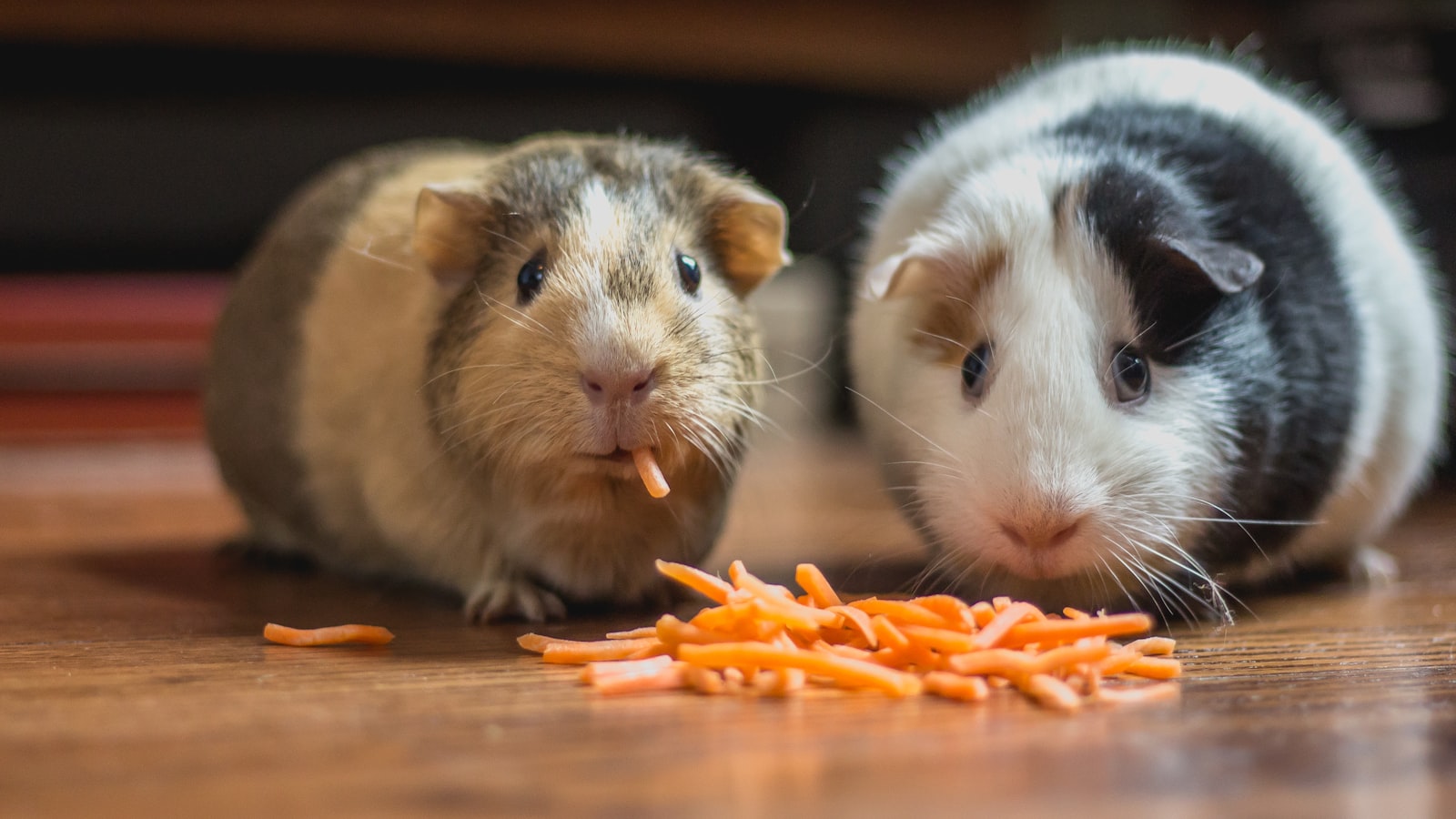
Guinea pigs are chatty, expressive little animals that greet you with squeaks, purr when they're content, and do a joyful little hop called popcorning when they're excited. They also happen to be one of the most commonly underhoused pets, kept alone in cages too small for their sociable, active nature.
Caring for them well isn't hard, but it does mean shaking off a few outdated ideas about what they need. Four things carry most of the weight: company, space, the right diet, and gentle handling. Get those in place and you'll have some of the most rewarding small pets you can keep.
They need a friend#
Start here, because it's the point most often missed. Guinea pigs are herd animals. In their natural setting they live in groups, and a guinea pig kept entirely alone tends to become withdrawn and lonely no matter how much time you give it. However much you enjoy your pig, you can't be a fellow guinea pig.
The kind thing is to keep at least two together. Same-sex pairs generally live well together, and a good approach is to adopt a bonded pair or let a rescue help match compatible pigs. Two pigs will chatter to each other, share their food, and pile up together to sleep, and you'll see behaviour from a bonded pair that a solitary pig simply never shows.
A lone guinea pig isn't a happy guinea pig. If you're only set up for one, you're really set up for two, and the pair will be far better company for each other than any human can be.
This social need is something guinea pigs share with rabbits, though the two shouldn't be housed together, as they communicate differently and a rabbit can injure a pig. If you're weighing up which small companion suits your home, our guide on caring for a pet rabbit is a useful comparison, since both are social animals that ask for more space than people expect.
Give them room to run#
The cages sold as guinea pig homes are almost always too small. A guinea pig that can only take a couple of steps never gets to run, and running is exactly what keeps it fit and happy. These animals like to zoom back and forth in bursts, and they need a long, open floor to do it.
Prioritise floor space over height, since guinea pigs aren't climbers. A large ground-level enclosure or a purpose-built C&C cage gives far more usable room than a typical shop cage, and a pair needs noticeably more space than a single pig would. Line the base with a solid floor and soft bedding, never a wire mesh floor, which hurts their sensitive feet.
Add a hide or two so they can retreat and feel safe, because guinea pigs are prey animals and get anxious with nowhere to duck into. Keep the enclosure somewhere with a steady temperature, out of direct sun and away from draughts, since they cope poorly with heat and sudden cold.
Hay, greens, and vitamin C#
Diet is where guinea pig care has one crucial quirk. Like us, and unlike most pets, guinea pigs can't make their own vitamin C, so they must get it from their food every day or they risk becoming deficient. That single fact shapes the whole menu.
The foundation, as with rabbits, is grass hay. It should be available around the clock, because it keeps the gut moving and wears down teeth that grow continuously. On top of that daily hay, guinea pigs need fresh vitamin C from suitable vegetables and a good-quality guinea-pig pellet, which is usually fortified with the vitamin. A daily portion of the right leafy greens rounds it out.
A simple daily framework looks like this:
- Unlimited fresh grass hay, topped up so it never runs out
- A daily serving of vitamin C-rich vegetables and safe leafy greens
- A measured amount of plain, guinea-pig-specific pellets
- Constant access to clean, fresh water
Introduce new vegetables gradually and in variety, and skip anything you're unsure about. Because vitamin C content in pellets fades over time and needs vary, it's worth confirming your pigs' specific diet with an exotics vet rather than assuming a bag of pellets covers everything.
Handling that builds trust#
Guinea pigs are timid by nature, and a new pig will often freeze or bolt when a giant hand appears overhead, which from its point of view looks a lot like a swooping predator. Winning trust takes patience and a calm, consistent approach rather than force.
Move slowly and let your pigs get used to your presence and voice before you scoop them up. When you do lift a guinea pig, support its whole body, one hand under the chest and the other supporting the back end, and hold it securely against you low to the ground so a wriggle doesn't turn into a fall. A short, gentle session followed by a treat helps a pig learn that being handled ends well. Our guide on handling small pets safely walks through this body-support technique in more detail, and it applies neatly to guinea pigs.
Children can absolutely be part of guinea pig care, but always with supervision and while sitting on the floor, so a startled pig that jumps has nowhere far to fall. The more calm, positive handling your pigs get, the more confident and affectionate they become.
Everyday care and staying well#
Beyond the big four, day-to-day guinea pig care is pleasantly simple. Spot-clean the enclosure daily, removing soiled bedding and old food, and do a fuller change regularly so the space stays fresh. Check nails now and then, as they keep growing and may need trimming, and give long-haired breeds a gentle brush to prevent tangles.
The real value of this daily contact is that you learn what's normal for your pigs, which makes changes easy to catch. Guinea pigs, like other prey animals, hide illness well, so a pig that has gone quiet, stopped eating, lost weight, or is producing far fewer droppings may be unwell and shouldn't be left to see if it improves. A guinea pig that stops eating needs prompt attention, since going without food quickly causes further problems.
Whenever something seems off, the right step is a vet who treats small animals, ideally an exotics vet, rather than home remedies or waiting it out. General care advice like this can't diagnose or treat an individual animal, and guinea pigs do best when problems are caught early.
Give them a friend, room to run, the right food, and a gentle pair of hands, and guinea pigs repay you with real personality, greeting you at the bars and squeaking for their greens. Few small pets are as openly happy to see you.